The Ingredients of a Healthy Diet
What belongs on a healthy plate


Dani Hofstetter
Dani Hofstetter
Food Scientist | Owner Performance Nutrition
Food Scientist | Owner Performance Nutrition

Starting point: nutrition in Switzerland
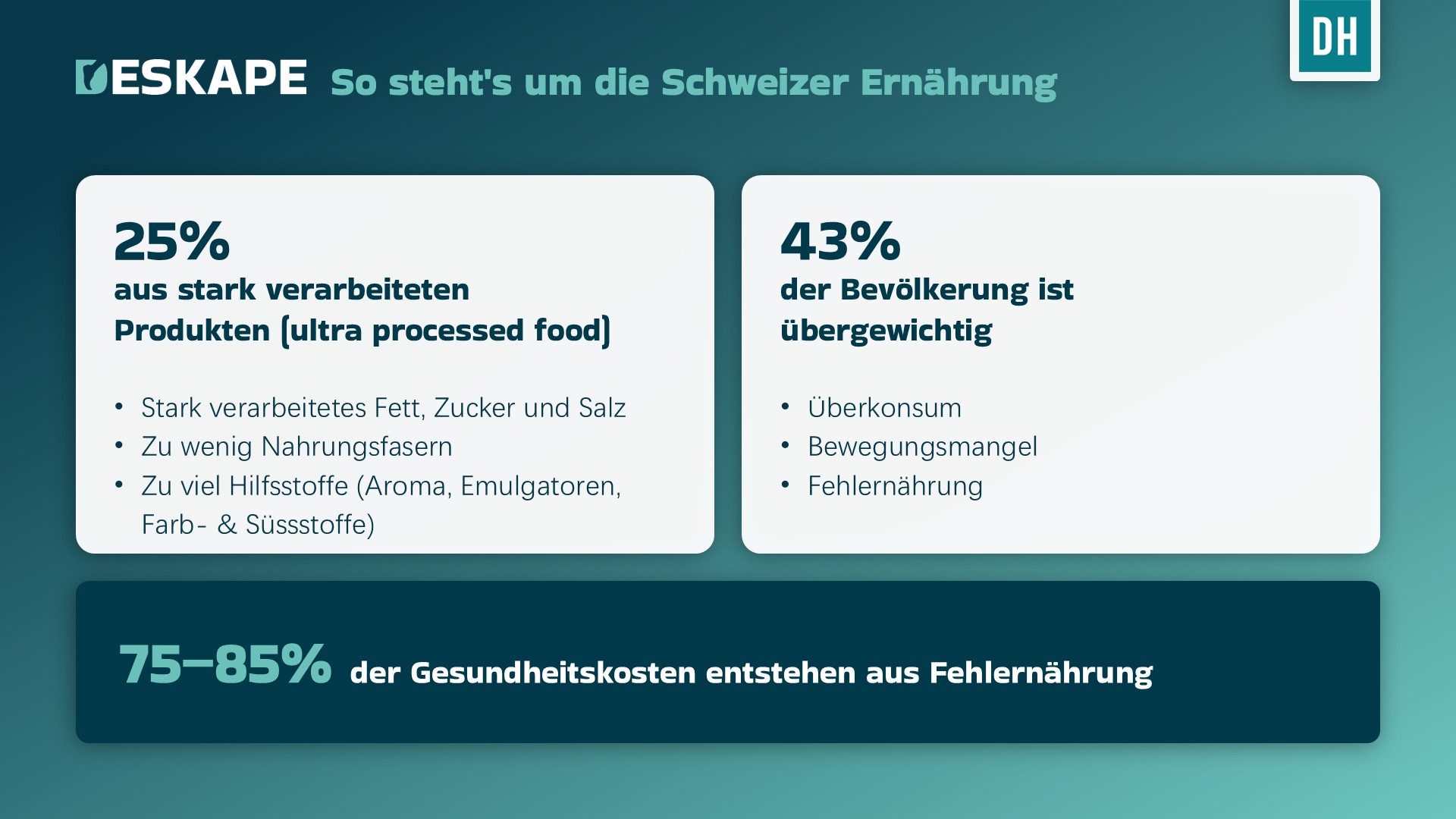
On average, 25% of the Swiss diet consists of highly processed foods. They are particularly tasty and easy to prepare because the industry deliberately uses three levers:
- a high fat content
- lots of sugar
- highly processed, very palatable fat
This combination disrupts the feeling of fullness, which leads to overeating. Together with additives (colourings, sweeteners, emulsifiers), it also damages the metabolism.
Consequences: excess weight and health costs
43% of the population is overweight – often the result of overconsumption and lack of exercise at the same time. Nutrition and physical activity always work together; that is exactly why the DESKAPE challenge combines activity minutes with building good habits.
Around 80% of healthcare costs in Switzerland are largely due to lack of exercise and poor nutrition.
Four simple levers for a healthy diet
- Buy products that are as unprocessed as possible – unpackaged or with the shortest possible list of ingredients. This increases nutrient density and keeps you fuller.
- Eat enough dietary fibre (formerly called “roughage”). It stabilises blood sugar, keeps you full for longer and feeds a diverse microbiome.
- Three colours on your plate – a variety of fresh, seasonal fruit and vegetables (not ketchup or the napkin).
- Eat mindfully – for around 20 minutes without your phone, laptop or TV. Chewing with concentration promotes healthy eating habits and a better sense of when you are full.

Measuring body composition: the waist-to-height index
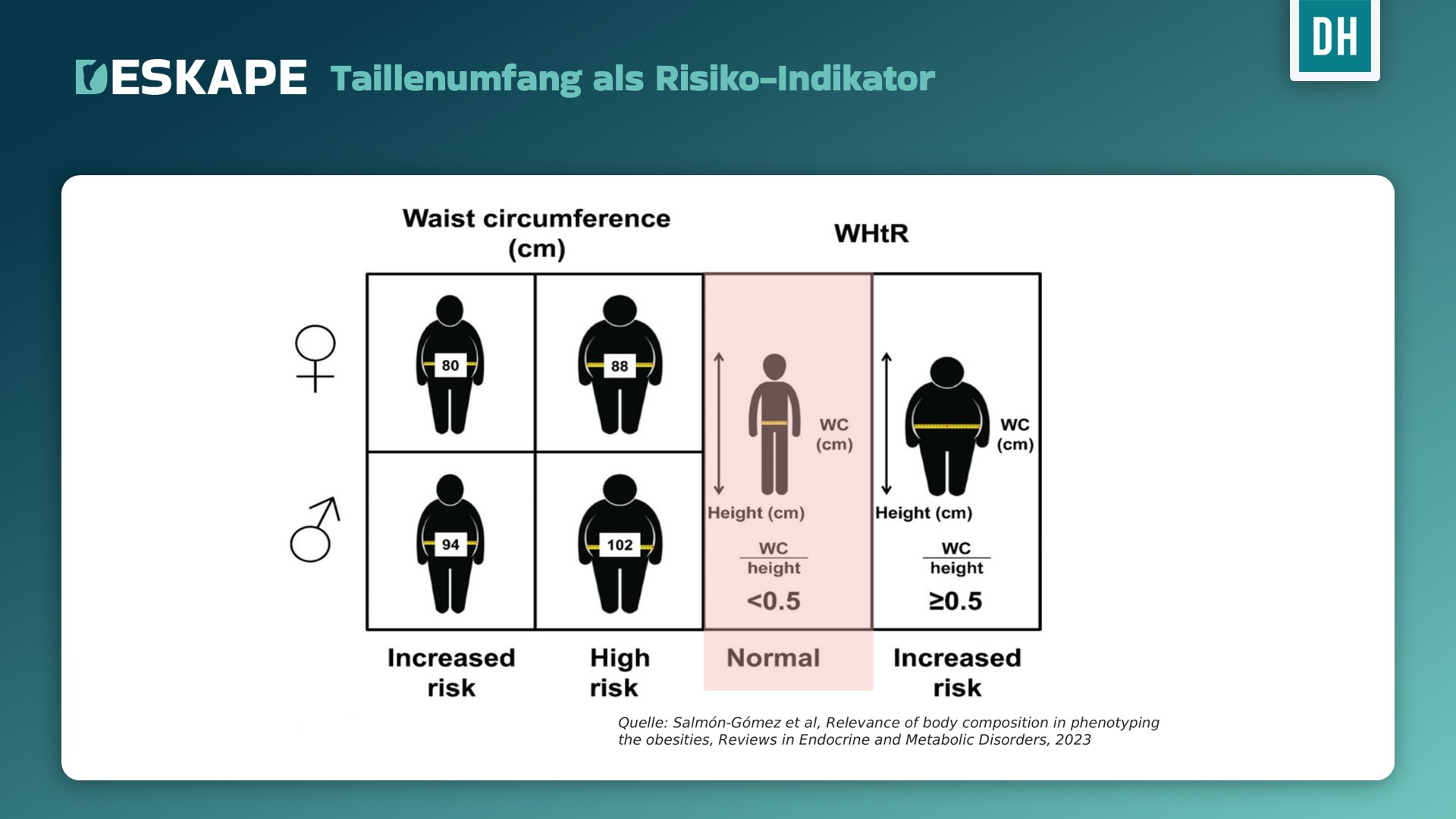
Instead of the (somewhat outdated) BMI, Hofstetter recommends the waist-to-height index: the ratio of waist circumference to height.
With a poor diet and too little exercise, the body prefers to store fat around the middle – sensible from an evolutionary point of view, but a health risk today. If the ratio of waist circumference to height exceeds 0.5, the risk of obesity, cardiovascular disease, cancer, depression and type 2 diabetes rises significantly.
If you exceed this threshold, you can step it up a little in the DESKAPE challenge or discuss the topic with your doctor.
The ideal plate
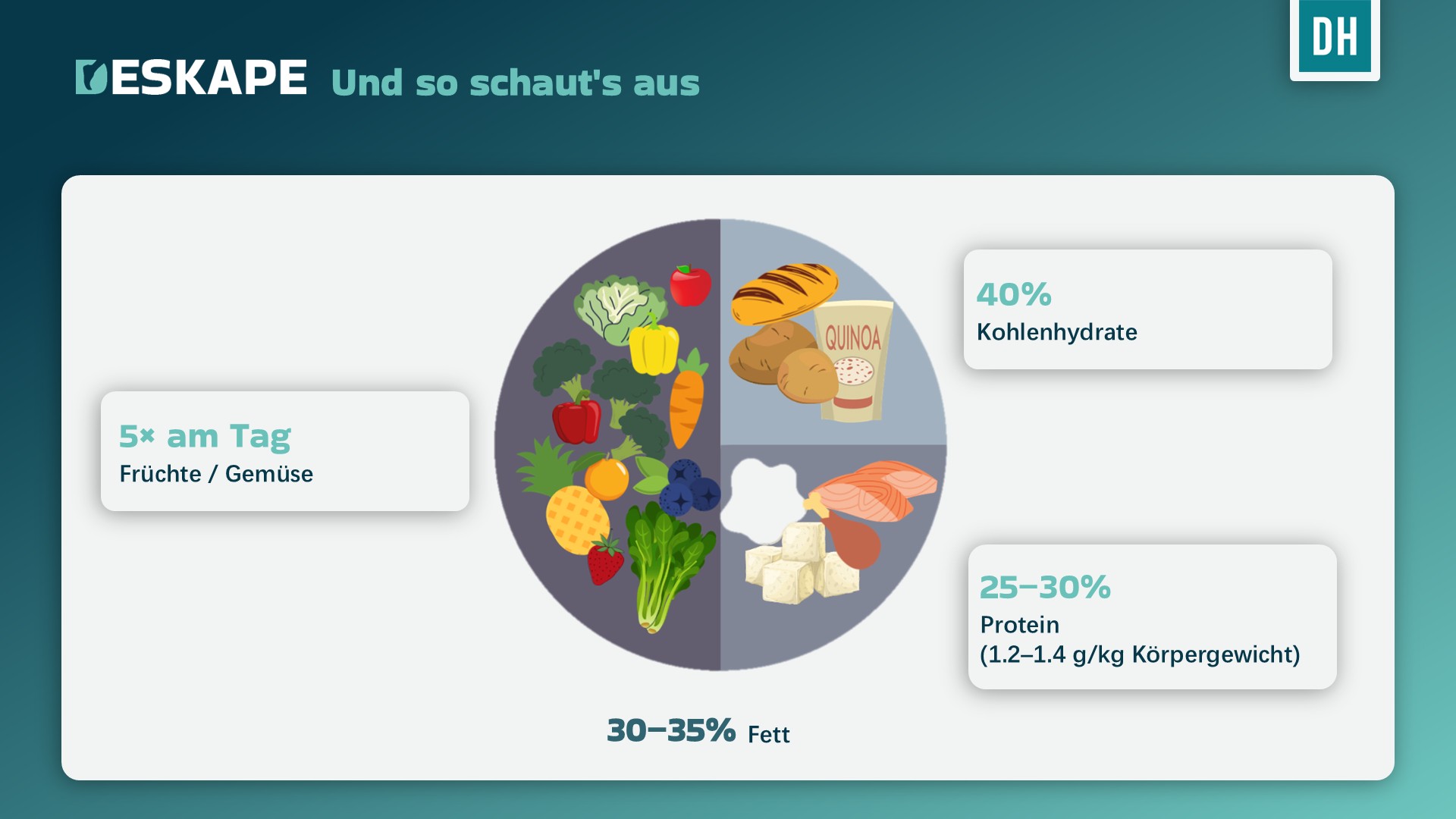
- Approx. 50%: colourful and fresh – fruit, vegetables, salad
- Approx. 25%: starchy sides, energy for activity and work – not just pasta, potatoes and rice, but also more exotic carbohydrates
- Approx. 25%: building blocks – protein and healthy fats
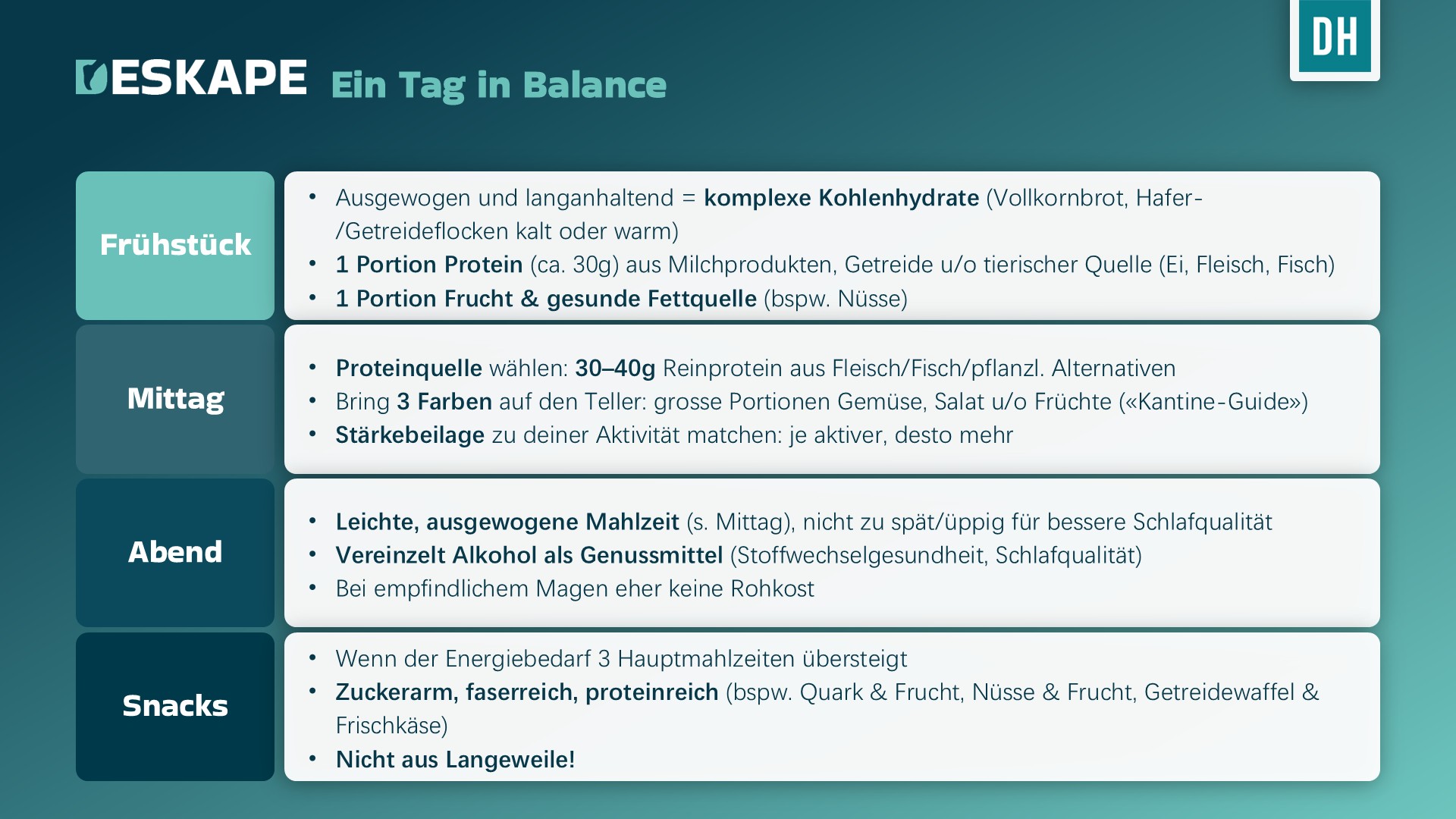
Guidance for your daily meal plan