Nutrition & Exercise
The Winning Team for Health & Performance


Dani Hofstetter
Dani Hofstetter
Food Scientist | Owner Performance Nutrition
Food Scientist | Owner Performance Nutrition

Why exercise is so important
Our bodies still work the same way they did 600,000 to 700,000 years ago, when movement and foraging for food were necessary for survival. Today, that necessity is gone – with consequences: most lifestyle diseases are caused by poor nutrition or lack of exercise.
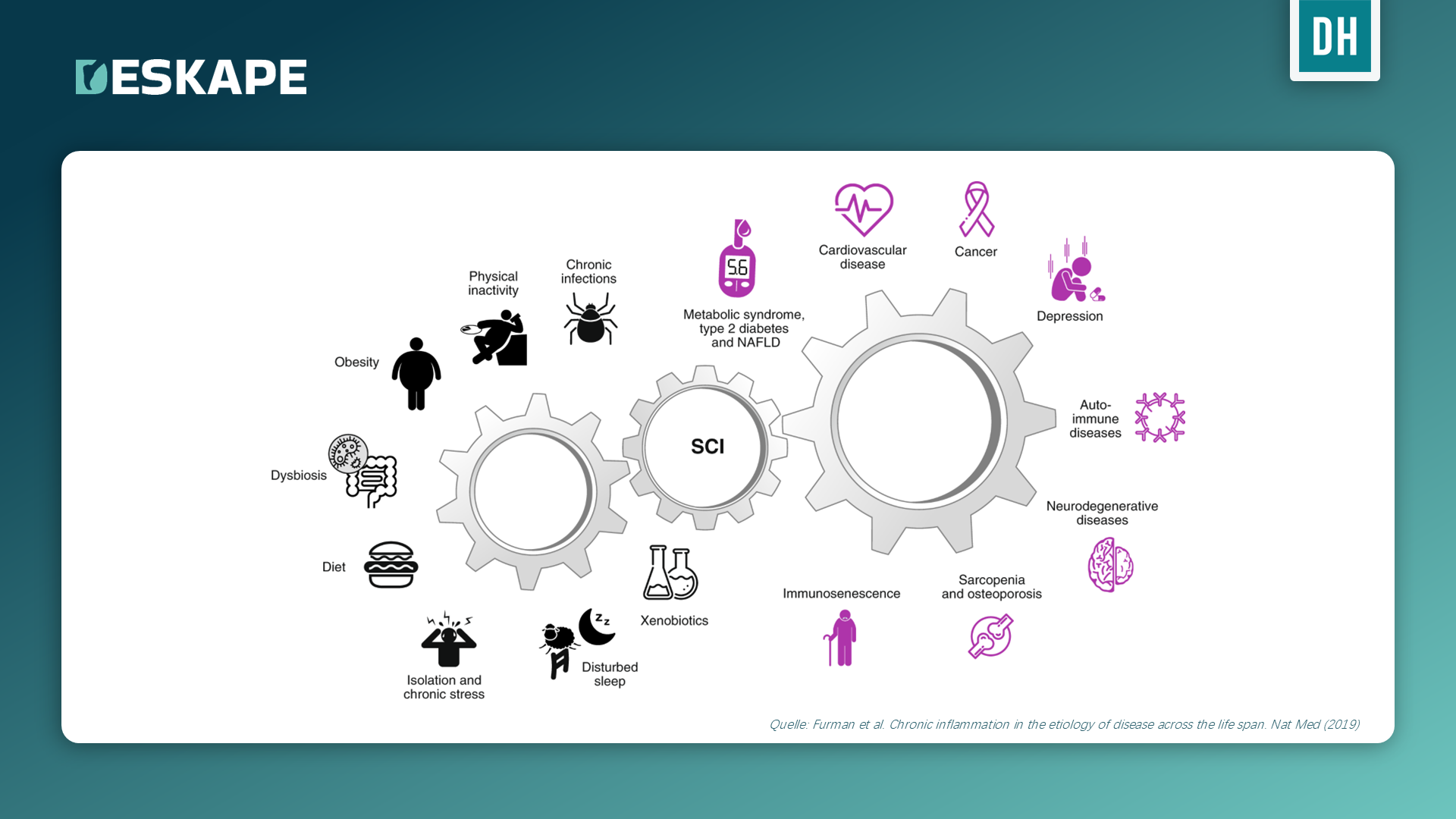
The common cause is low-grade chronic inflammation (“silent chronic inflammation”). Inflammation in itself is nothing bad, but when it becomes chronic, it affects the entire organism, causes structures and metabolism to deteriorate gradually and thus promotes disease.
The model shown follows a chain: on the left the triggers (above all lack of exercise and poor nutrition) → in the middle chronic inflammation as the common cause → on the right the resulting lifestyle diseases.
Muscles as glands
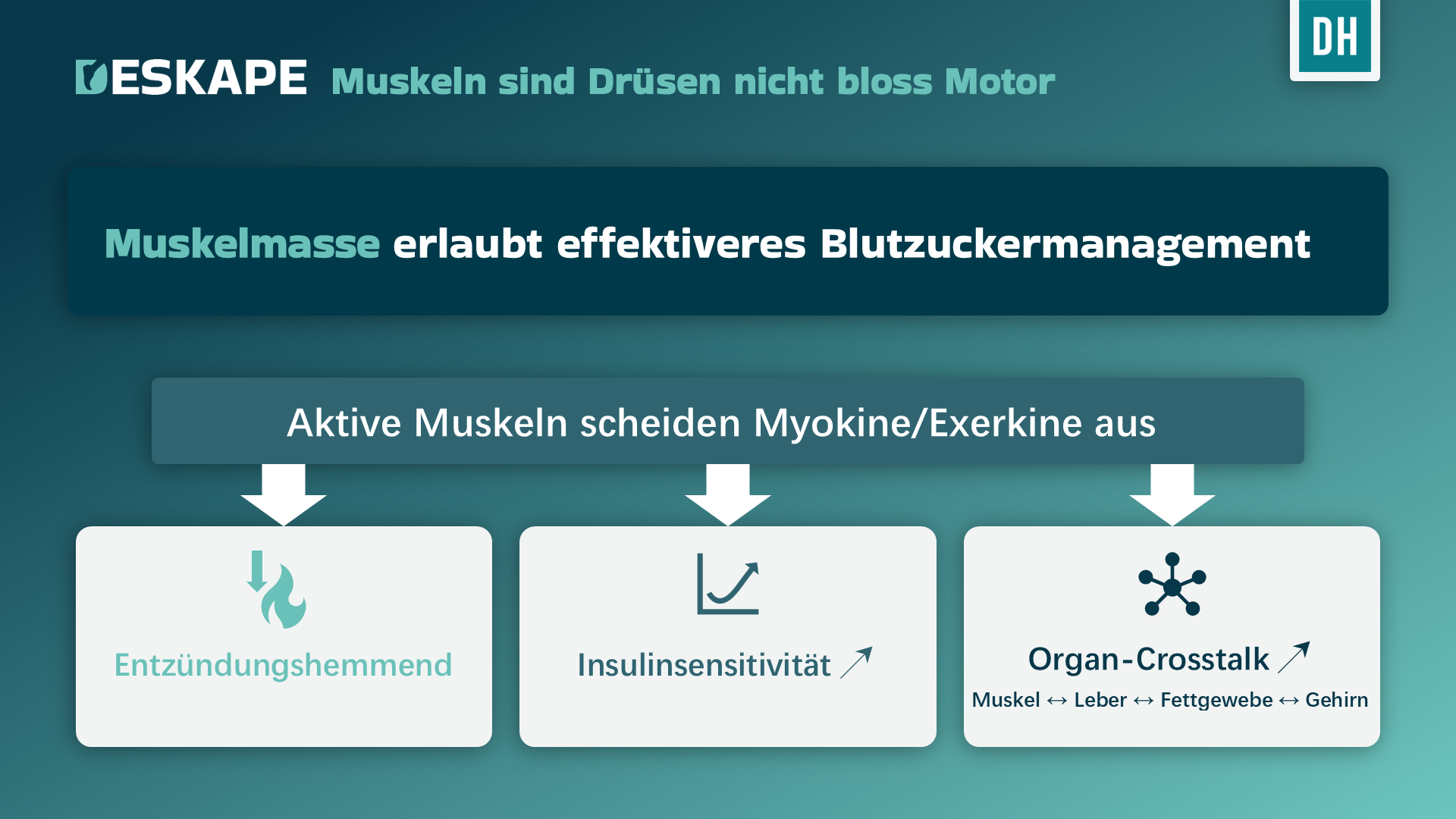
Muscles are not just a motor, they are also glands: under strain they release myokines – substances that fight inflammation and have a positive effect on the metabolism. Muscle mass also helps to regulate blood sugar better. Viewed over a whole lifetime, regular exercise is therefore a key building block of a lastingly healthy lifestyle.
How much exercise?
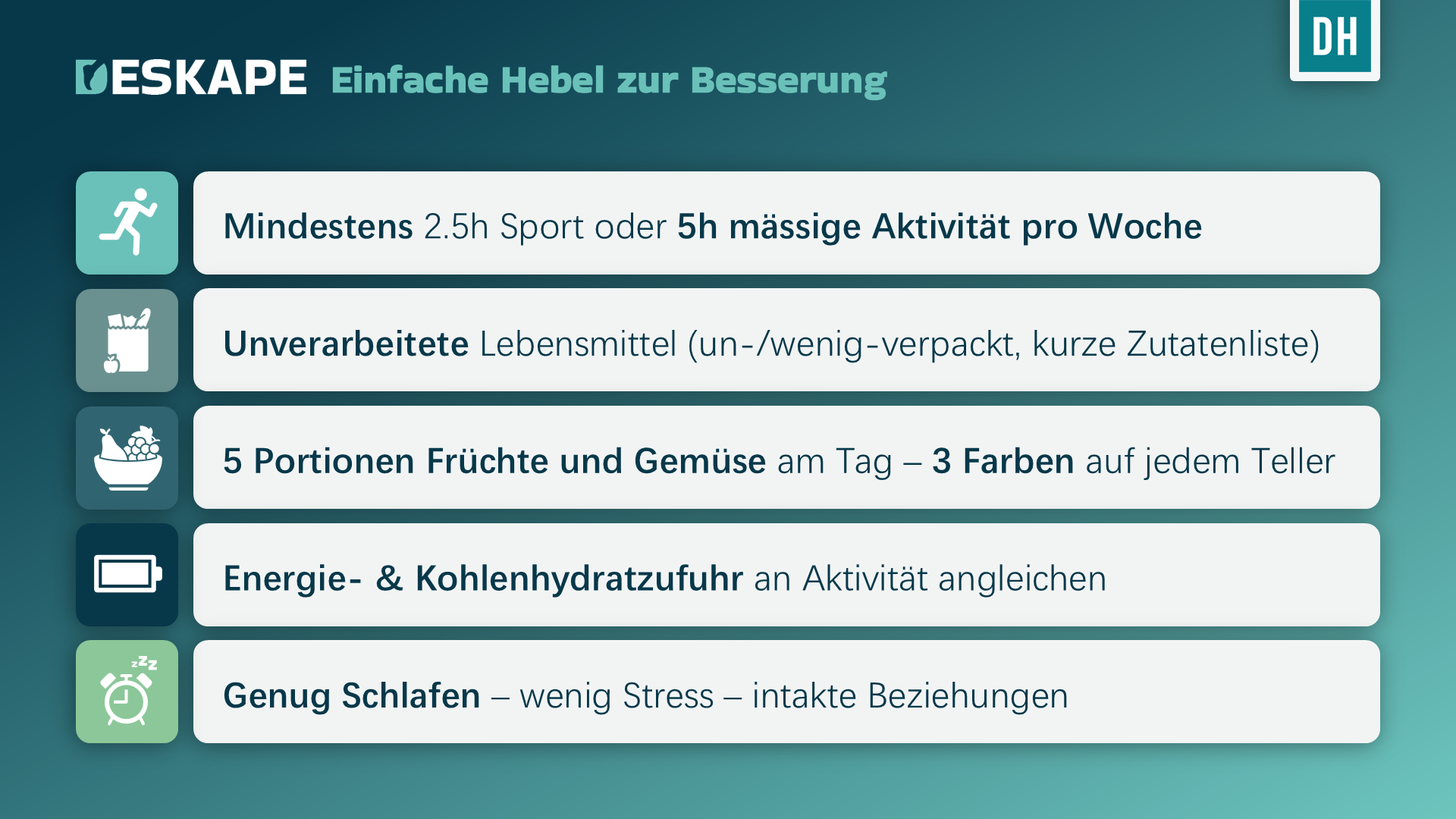
The WHO recommends 5 hours of exercise per week or 2–3 hours of intensive sport. In concrete terms, that means either around 2.5 hours of sport per week or, if you prefer it less intense, around 300 minutes of moderate activity over seven days – permanently, not just during the DESKAPE month.
Further benefits of regular exercise
If you use your body regularly, you maintain its structures and benefit in other ways too:
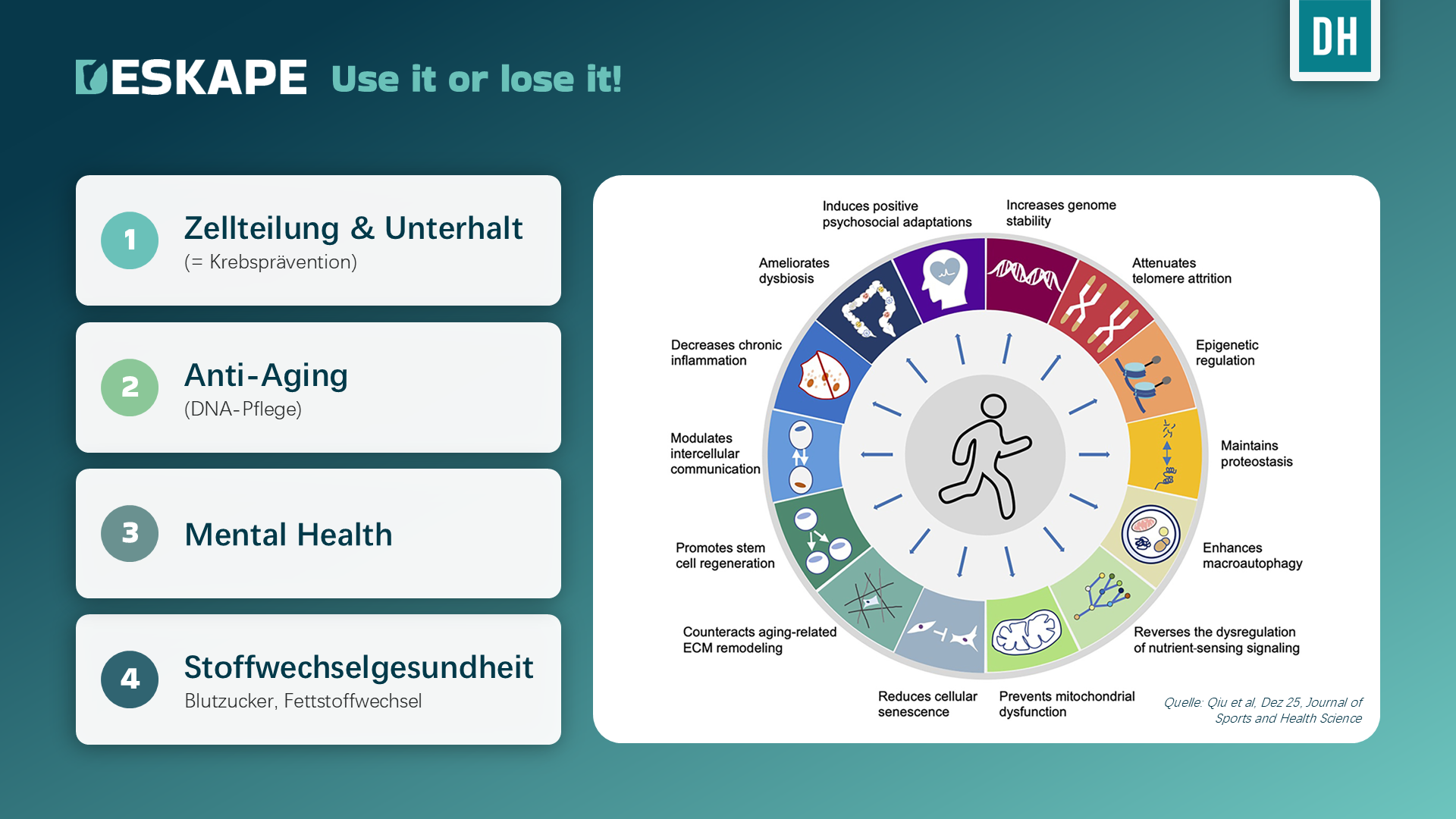
- Better cell division: DNA is better maintained and faulty sections are removed more efficiently, which means healthier biological ageing.
- Better mental health: exercise stimulates the brain and the messenger substances that make us happy.
- Better eating habits: a balanced energy balance leads to a healthier body.
Even small changes to your daily routine help – such as getting off the tram one stop earlier or always taking the stairs instead of the lift.
The three building blocks: exercise, nutrition, recovery
- Exercise: regularly, in line with the recommendations above.
- Nutrition: plenty of unprocessed food, calorie intake matched to your activity, amount of carbohydrates adjusted to your activity (more on this in the separate nutrition video).
- Recovery: sleep and giving your brain a break – not only from work, but also from other cognitive stimuli. Recovery is crucial for regeneration, motivation to exercise and new ideas.
Together, these are the ingredients for growing older in a long, healthy and contented way – not only at work, but also at home with your family.
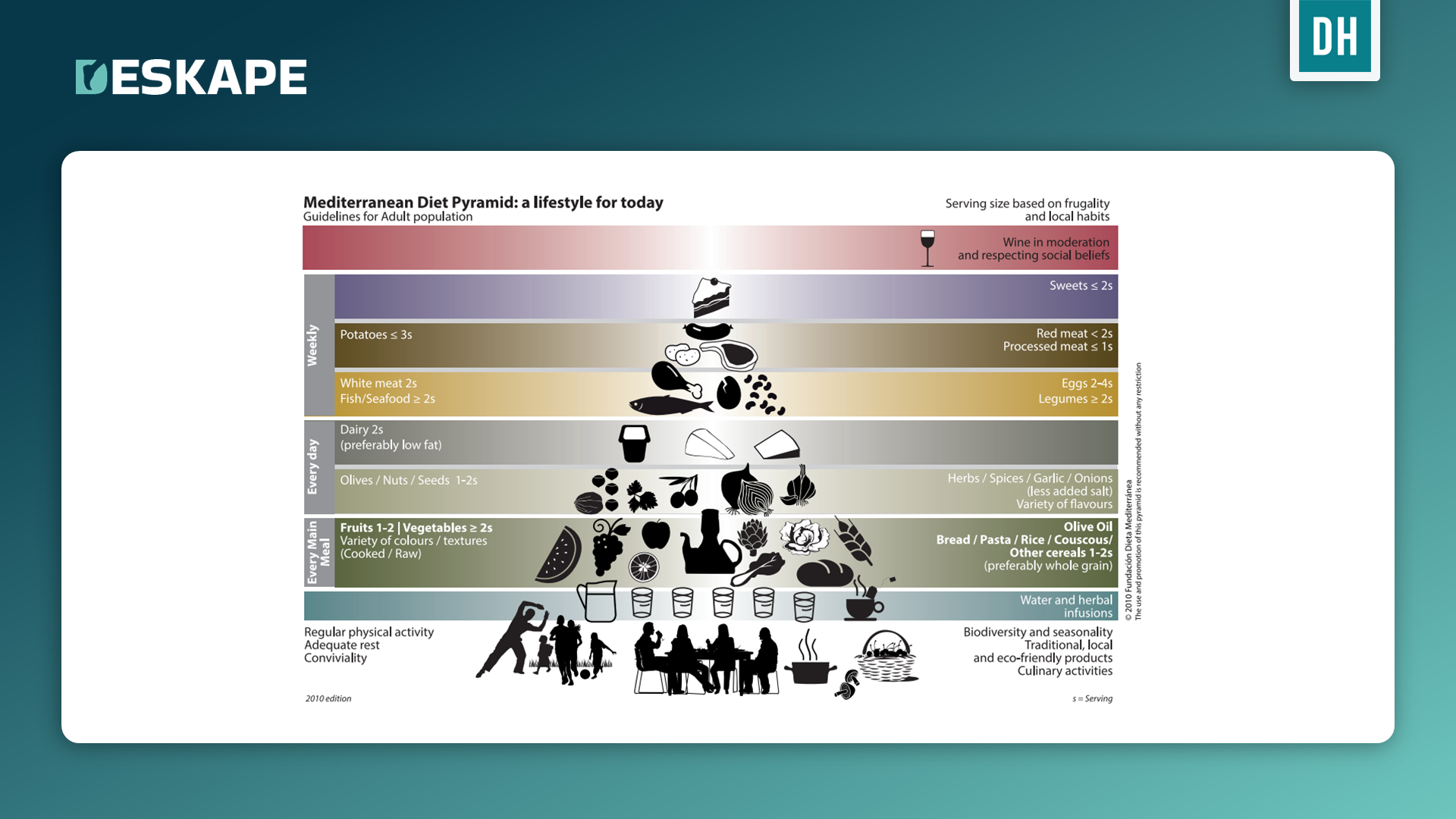
Food pyramid